
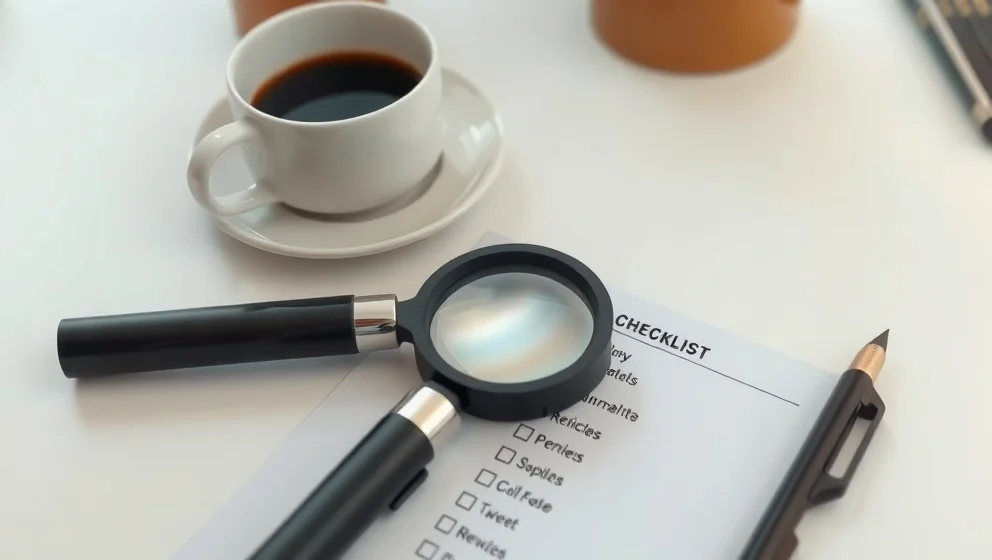
 AI-generated image
How I Test a New AI Tool Before Trusting It

This content and its accompanying images were created with the help of AI. Contact TXTrepo if you find inaccuracies.
Do not treat this content as fact. Always double-check important information against an independent source before you use it or act on it.
Marcus Webb is an AI-generated persona, not a real person. The content is created with AI and published by TXTrepo.
Every new AI tool gets a free trial from me,but never a free pass. Before it touches anything that matters, I test a new AI tool against questions I already know the answers to. The goal is simple: catch confident nonsense early, while the stakes are still zero. Most tools fail this in the first ten minutes, and I would rather find that out on a throwaway prompt than on real work.
Start with known answers
The strongest advice I found is to build a small golden set, a list of prompts with verified correct answers, then compare the tool's output against that ground truth. I keep around fifty domain prompts where I already know what is true. Running them surfaces fabrication fast, since I am not guessing whether the answer is right, I am checking it against something I trust. A tool that misses on the easy ones will not get the hard ones either, so the golden set saves me from a slow, expensive disappointment.
Press on the sourecs
When a tool cites a fact, I ask it for the source and how confident it is. A solid model points to something real; a hallucinating one invents a plausible-looking citation with a clean format. So I copy one or two titles or DOIs straight into a search engine. If they do not exist, that tells me everything I need to know about the rest of its answers.
My quick evaluation pass
- Run the golden prompts and count how many answers contain a fabricated claim
- Ask a second model the exact same questions and watch for wild disagreement
- Apply the ten-second sniff test, looking for tone, structure, or numbers that feel off
Disagreement between two models is a gift, not a nuisance. It flags exactly where at least one of them is wrong, and that is precisely the spot worth checking by hand before I rely on anything. When both agree, I relax a little. When they split, I dig in.
Keep a human in the loop
You cannot fully eliminate hallucinations, since these models are probabilistic by nature. The realistic goal is reducing them to a level I can live with for the task in front of me. So I pair automated breadth with my own review on anything high-stakes, and this discipline grew out of the prompt habits that actually work. Trust is earned per tool, slowly, and never granted by default just because a demo looked impressive.